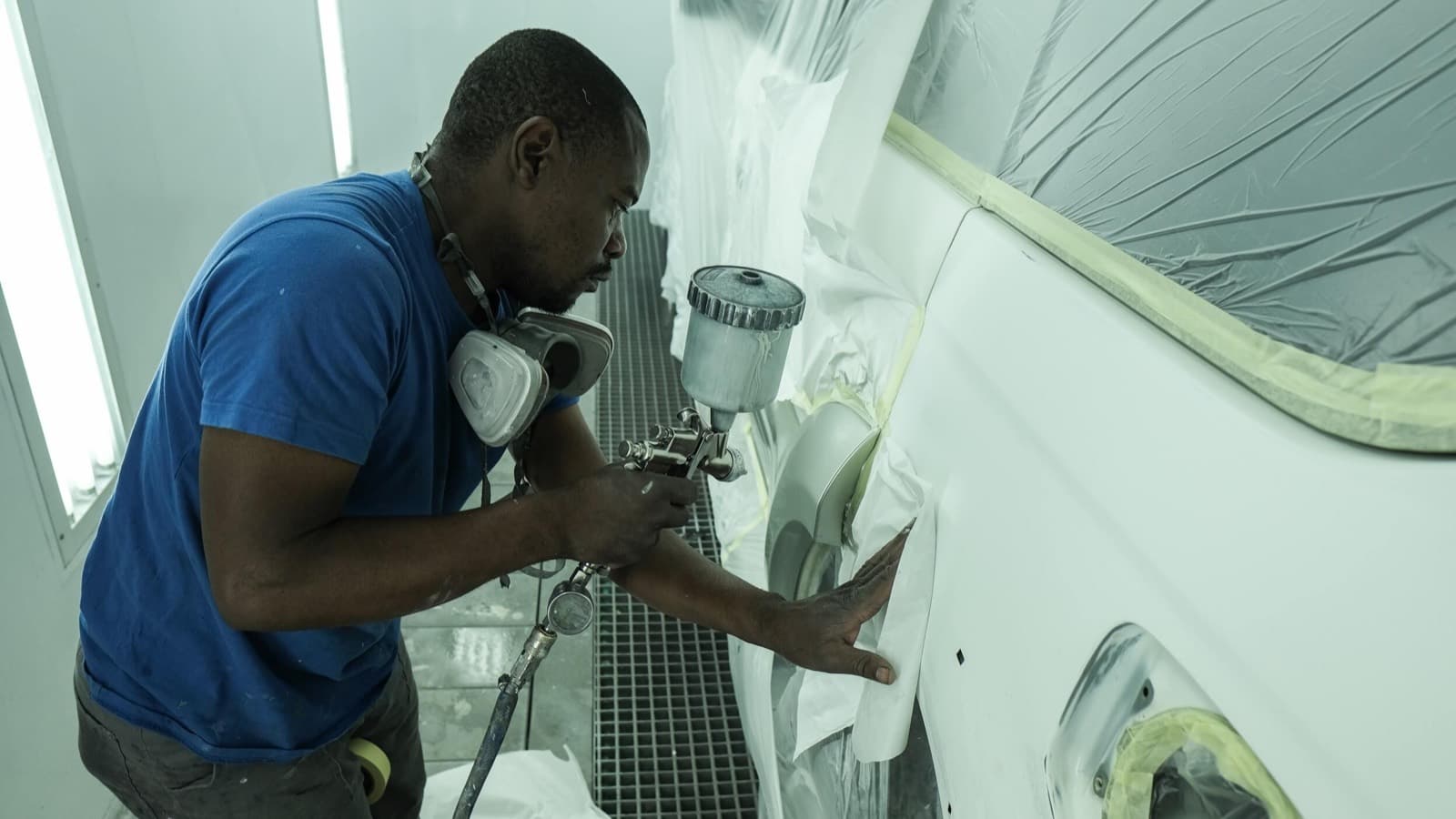
If you have asked two panel beaters for a respray quote and got two very different numbers, you are not imagining things. Spray-painting is one of those jobs where the price depends heavily on the car, the colour, the condition of the metal underneath and the standard of finish you actually want. There is no single "respray price", and any shop that quotes you one over the phone without seeing the car is guessing.
This guide walks through the real factors that move the cost of a respray up or down, so you can read a quote with confidence and understand why the cheapest number on paper is not always the cheapest job in the end.
The short version
- Respray cost is driven by how many panels and which ones, the paint type (solid, metallic, pearl or matte), and how complex the colour is to match.
- Prep is where quality lives: dents, rust and surface work under the paint matter as much as the colour on top, and skipping them is how cheap resprays fail.
- A single-panel repair and a full respray are different jobs; the right choice depends on your car's condition and what you want from the finish.
- The lowest quote can cost more later if it cuts corners on prep, product or coats, so ask for a free, itemised quote you can actually compare.
Size and number of panels
The most obvious cost driver is how much of the car you are painting. A single door is a small job. A bonnet, both front doors and a quarter panel is a much bigger one, and a full respray covering every exterior panel is the largest job of all.
Larger panels use more material and take longer to prepare, mask and spray. Panels with awkward shapes, deep contours or lots of edges also take more careful work than a flat, simple surface. So the cost is not just about how many panels, but which ones and how complex they are.
Paint type: solid, metallic, pearl or matte
The colour on your car is not just a colour, it is a type of paint, and each type behaves differently in the booth.
- Solid colours (a plain white, red or black) are the most straightforward to spray and match.
- Metallic paints contain fine metal flakes that must be laid down evenly, or you get patchy, streaky areas in the light.
- Pearl and three-stage finishes use extra layers to create depth and colour shift, which means more product and more time.
- Matte finishes are unforgiving: they cannot simply be polished to hide a flaw, so the prep and application have to be right the first time.
The more complex the finish on your car, the more skill and time the job needs, and that shows up in the quote.
Colour matching complexity
Even with the manufacturer's paint code, matching a colour perfectly is a craft. Paint fades and shifts over years in the Highveld sun, so a fresh mix straight from the code can look slightly off against your existing panels.
A good shop tints and tests the mix, then blends into the surrounding panels so the repair disappears rather than sitting there as an obvious patch. Blending into neighbouring panels takes more time and material than spraying a single panel edge to edge, but it is often the difference between an invisible repair and one you can spot from across the parking lot.
Prep, rust and dent repair underneath
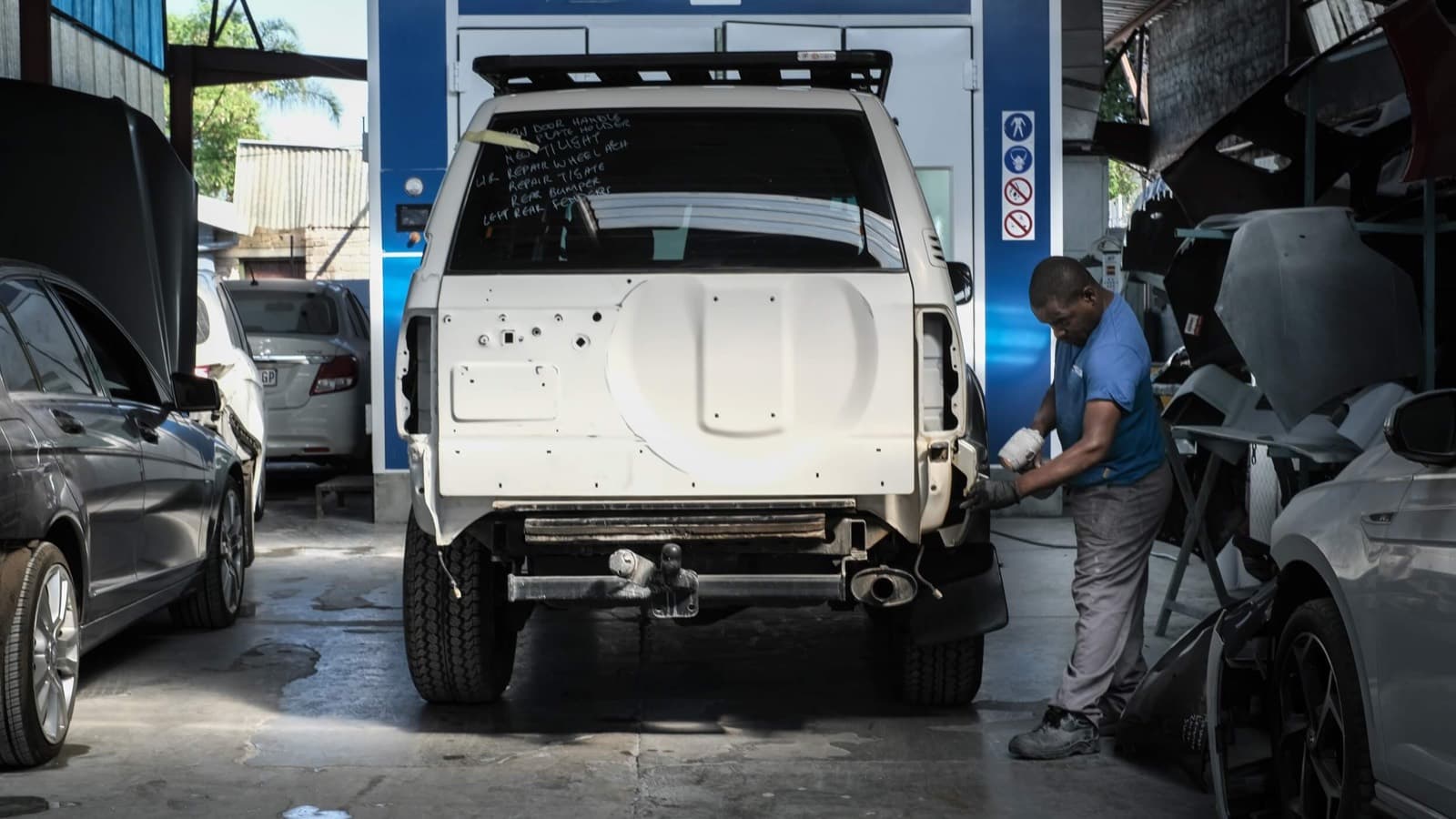
Paint only looks as good as what is beneath it. A big part of a respray is the preparation you never see in the final photo: sanding, filling, priming and getting the surface dead straight.
If a panel has dents, they need to be worked out or filled before any colour goes on. If there is rust, it has to be cut out or treated properly, because paint over rust simply lifts and bubbles again within months. A car that needs dent and rust repair before painting will cost more than a clean, straight panel, but skipping that step is how a cheap respray turns into a redo. At Brilliant Shine, rust work is backed for one year or the balance of the factory warranty, whichever applies.
Single panel versus a full respray
Repainting one panel and respraying the whole car are different jobs with different economics. A single-panel repair is quicker and uses less material, but it demands precise colour matching and blending so it ties into the rest of the car.
A full respray is far more labour: the car is stripped of trim, badges, handles and rubbers, every surface is prepared, and it all goes back together afterwards. It costs more in total, but per panel it can be more efficient, and it removes the matching problem because everything is the same fresh colour. Which route makes sense depends on the car's condition and what you want out of it.
Quality of paint, clear-coat and why cheap can cost more
Not all paint and clear-coat is equal. Better-quality products hold their colour and gloss for longer, resist UV and stone chips better, and are less likely to fade or peel. Cheaper materials and thinner coats can look fine on collection day and then dull, yellow or flake within a year or two.
This is why the lowest quote is not always the cheapest outcome. A quote can come in low because it skips proper prep, uses less product, applies fewer coats or does not blend the colour. You save money now and pay again later when the finish fails. A fair quote should be itemised so you can see what you are actually paying for.
Is it an insurance job?
If the repair is going through insurance, the process shapes how the work is quoted and approved. You get a repair quote from the panel beater, submit it to your own insurer and complete their claim forms, and the insurer sends an assessor to inspect the car. Once the insurer approves, the repair goes ahead.
You generally have the right to choose your own repairer under the Competition Commission's right-to-repair guidance, so an insurer cannot force you to use theirs (one exception is a car still under manufacturer warranty, which may need an approved repairer). Whether you pay privately or claim, you will also carry your policy excess, and the itemised quote helps you understand exactly what is being done.
Get a free, itemised quote
Because so many factors move the number, the only accurate way to know what your respray will cost is to have someone look at the car. Brilliant Shine has been spray-painting in Randburg since 1998, is owner-led by Fred Fourie, and carries a 4.8-star Google rating across 88 and more reviews.
Every quote is free and itemised, comes with a firm completion date (most minor repairs are done in days, not weeks), and the workmanship is backed by a written 12-month warranty, with paintwork covered per the paint manufacturer's warranty. That way you can compare quotes on what actually matters, not just the bottom line.
Get an honest respray quote
The only way to know your cost is an itemised quote. Explore our spray painting and colour matching service, or request a free quote.
Frequently asked
Because a respray is not one fixed job. The number depends on how many panels and which ones, the type of paint and colour, how much dent and rust repair is needed underneath, the quality of the paint and clear-coat, and whether the colour needs careful blending. A low quote sometimes reflects less prep, fewer coats or cheaper material, which is why an itemised quote is the only fair way to compare.